English US

X (Twitter) Reposts, Quote Posts and Replies: Choose the Right Link
Published 2026-11-17
Your client sends an X link and says, “Use this post.” You open it and find their comment above someone else’s announcement. Which post belongs in the campaign: the announcement, the client’s comment, or a reply underneath?
That small distinction can change the entire brief. This guide explains how to identify the right content before handing work to a colleague, preparing a report, or reviewing a Twitter SMM panel service.
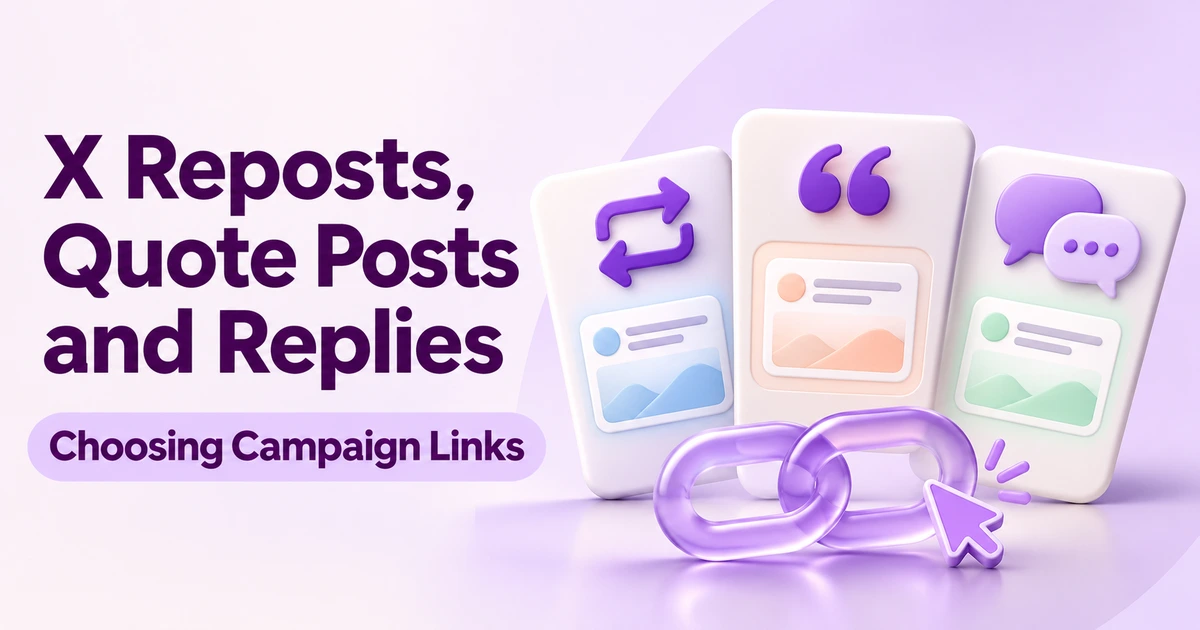
Three formats, three different intentions
A plain repost shares an existing post without adding your own commentary. A quote post places your comment alongside a referenced post. A reply responds within a conversation. X explains these formats in its reposting guide and post-type documentation.
For planning purposes, think of them as three different editorial decisions:
- Repost: “This existing message is worth sharing.”
- Quote: “Here is our perspective on this message.”
- Reply: “Here is our contribution to this conversation.”
None is automatically the best choice. A product announcement may need clear commentary from your brand. A customer question may deserve a direct answer rather than a new standalone discussion. Start with what the reader needs, not whichever number is easiest to count.
Identify the exact post, not just the account
Open the intended content and inspect the author and wording before copying its link. In a quote, the large embedded card can draw more attention than the commentary above it. That makes it easy to copy or approve the wrong item.
Keep a short record containing the account name, the first few words and the content type. Open the copied link again and compare it with that record. Do not rely on a screenshot alone: it helps a colleague recognise the content, but it does not replace a working destination.
For a thread, also specify which individual message matters. The opening announcement, a follow-up explanation and a customer reply may all discuss the same launch while serving different purposes.
A campaign brief that removes ambiguity
Illustrative example: a small software company quotes a partner’s event announcement. Its commentary explains that the company will demonstrate a new reporting feature. Someone then asks a pricing question beneath the quote.
“Promote the event post” could mean any of those messages. A clearer brief would read:
- Primary content: our company’s quote beginning “See our new reporting workflow on Thursday.”
- Purpose: explain our demonstration and help interested readers find registration details.
- Separate support task: answer the pricing question accurately through the company account.
- Reporting: keep the original announcement, our quote and the customer reply separate.
This is a planning example, not a claim about campaign performance. Its value is practical: the writer, account manager and analyst know which message they are discussing without reopening a long chat history.
Checks for Twitter SMM panel customers
If you are comparing a Twitter SMM panel or X service, treat the service description as a specification, not a general promise of growth. A familiar label such as “retweets” does not establish support for every post format.
- Accepted link: does the description require a post URL or a profile URL?
- Supported action: what exactly does the service describe delivering?
- Conditions: what visibility, quantity and content requirements apply?
- Support: what should you do if the submitted link was wrong?
Review the BulkFollows ordering workflow and current terms before committing funds. When a requirement is unclear, resolve it first rather than guessing from a service name.
Report results without mixing different posts
Create a separate reporting row for each content item you actually manage. Include its link, role in the campaign, reporting date and available measurements. Keep unavailable figures marked as unavailable rather than entering zero.
A large total assembled from several posts can hide the useful detail. Your quote might generate questions while the original announcement attracts broad attention. Those are different observations, and neither proves that somebody became a customer.
Where you control a website destination, consistent UTM links can help organise traffic reporting. Keep website measurements separate from X engagement counts and from any panel order status. A completed order is not evidence of revenue.
Your final link check
Before handing over the campaign, reopen the link and ask three questions: Is this the intended author? Is this the intended message? Does the requested action match the brief?
If anything has changed, update the record before proceeding. Keep the previous link in your internal notes rather than quietly replacing it in an existing report. That small habit makes later questions about delivery, revisions and results much easier to answer.
The goal is not a longer approval process. It is a brief clear enough that nobody has to guess what “this post” means.
Sources & further reading
Official sources checked 17 November 2026.
